
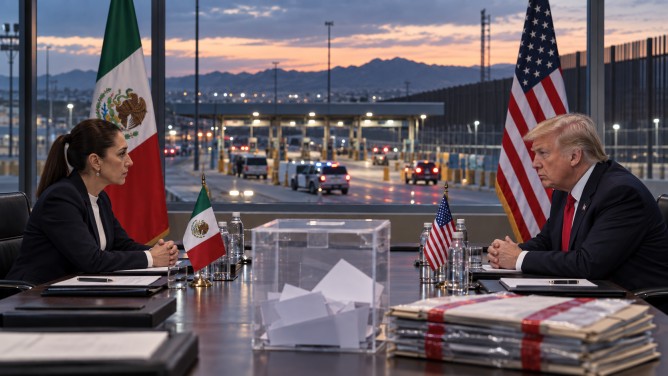
As the United States and Mexico gear up for pivotal elections, an escalating dispute over drug trafficking and corruption is set to have significant political ramifications. The Trump administration’s increasing pressure on Mexico to curb illegal drug flows and prosecute officials tied to criminal groups is becoming a key talking point in the lead-up to the U.S. midterms this November.
President Donald Trump has publicly criticized Mexico for what he perceives as insufficient efforts to stem the tide of illegal drugs into the U.S. and to address alleged connections between organized crime and Mexican public officials. This criticism has fueled a heated political debate domestically, with Trump leveraging these issues as part of his campaign rhetoric.
In response, Mexican President Claudia Sheinbaum has pushed back against what she considers undue interference from the U.S., defending her government’s actions in tackling organized crime and corruption. She has emphasized Mexico’s sovereignty and called for Washington to intensify its crackdown on drug distribution networks, money laundering, and the illegal export of weapons to Mexico—a factor she argues exacerbates violence in her country.
The tension has been exacerbated by recent U.S. legal actions targeting Mexican officials accused of having ties to organized crime, including the revocation of visas for several politicians. President Sheinbaum has questioned the motivations behind these actions, suggesting they may be politically driven as both countries navigate their electoral landscapes.
Domestically, the conflict is stirring Mexico’s political waters as well. Opposition parties are seizing on allegations of “narco-politics” to challenge Sheinbaum’s ruling Morena party, which is pressing for stricter vetting and financial transparency among political candidates ahead of Mexico’s 2027 elections. This internal scrutiny is shaping the political dialogue as Mexico prepares for its own electoral contests.