
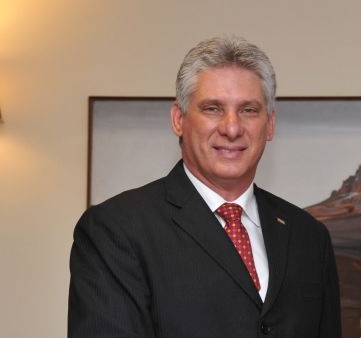
Cuban President Miguel Díaz-Canel has issued a stark warning, indicating that any military action by the United States against Cuba would result in a “bloodbath” with unpredictable impacts on peace and stability in the region. Díaz-Canel emphasized in a statement on social media that “Cuba does not represent a threat,” responding to recent allegations concerning the nation’s military capabilities.
These remarks come on the heels of a report suggesting that Cuba has acquired over 300 military drones and has allegedly discussed using them to target the U.S. naval base at Guantánamo Bay, as well as U.S. military vessels and locations in Key West, Florida. This intelligence report has fueled tensions between the two long-standing adversaries.
Cuban Foreign Minister Bruno Rodriguez also addressed the situation, asserting Cuba’s right to self-defense as per the United Nations charter and international law. He criticized those who advocate for attacks on Cuba, accusing them of using false pretenses to justify aggressive actions. The diplomatic strain between Washington and Havana has been exacerbated by recent U.S. actions, including the cessation of energy supplies following the arrest of Venezuela’s president, a key Cuban ally, earlier this year.
Amid these rising tensions, Cuba has been grappling with severe shortages, including a significant reduction in fuel supplies, leading to sporadic electricity availability. The situation is further complicated by reports that U.S. prosecutors are considering indicting former Cuban leader Raúl Castro. This potential indictment relates to Cuba’s 1996 downing of two planes operated by the humanitarian group Brothers to the Rescue and would signify a significant escalation in U.S. pressure on Cuba.
Such developments underscore the prolonged and complex relationship between the two nations. The Trump administration has been vocal in its criticism of the Cuban government, labeling it as corrupt and inefficient, and these latest actions appear to reflect a continued push for political change on the island. As diplomatic tensions mount, the international community watches closely, mindful of the broader implications for regional stability.