
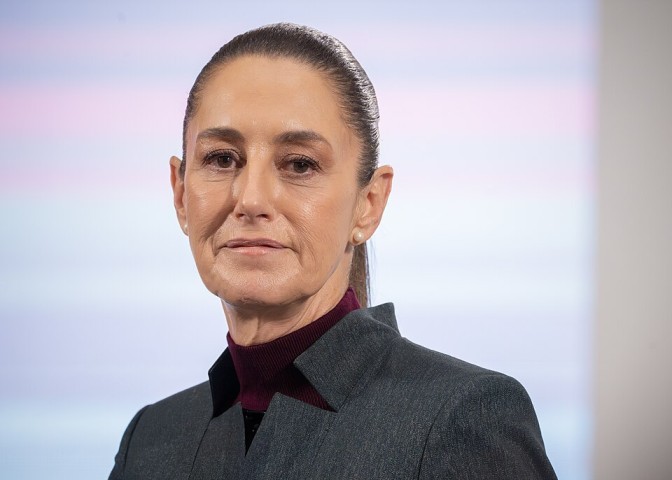
In a recent development ahead of the FIFA World Cup, Mexico has stepped up to host Iran’s national football team after the United States reportedly opted not to accommodate the squad throughout the tournament. This decision was confirmed by Mexican President Claudia Sheinbaum, who revealed that FIFA reached out to Mexico following the US authorities’ refusal to host the Iranian team overnight, despite Iran’s group-stage matches being scheduled in the United States.
The Iranian team will now establish its training base in Tijuana, Mexico, a strategic location near the US border and in close proximity to San Diego, California. FIFA has officially announced this change while releasing the list of team base camp locations for the upcoming tournament. Initially, Iran had planned to set up its World Cup base in Tucson, Arizona, but escalating tensions in the Middle East and concerns related to US sanctions on Iran have reportedly complicated these plans.
President Sheinbaum assured that Mexico is fully prepared to accommodate the Iranian squad and is actively working with FIFA to finalize the logistical arrangements necessary for the team’s stay. This decision reflects Mexico’s willingness to facilitate the tournament’s smooth progression amidst the geopolitical complexities surrounding Iran’s participation.
Mehdi Taj, president of the Iran Football Federation, expressed that relocating to Tijuana would help the team avoid potential visa-related challenges. He also noted that the team could travel directly to Mexico using Iran Air flights, simplifying their logistical requirements. Meanwhile, the US State Department has maintained that Iran is welcome to participate in the World Cup but did not provide specific reasons for the decision against hosting the Iranian team within the US during the event.
The FIFA World Cup, set to take place from June 11 to July 19, will be a collaborative effort hosted by the United States, Mexico, and Canada, marking a significant event in the sporting calendar. As the tournament approaches, Mexico’s role in accommodating the Iranian team highlights the intricate balance of international relations and sports diplomacy on the global stage.