
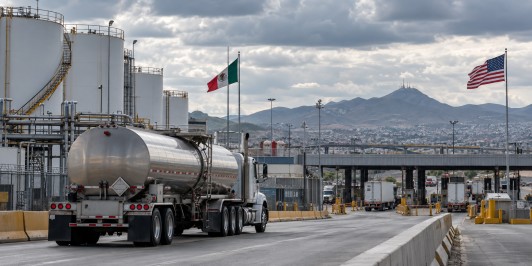
Mexico is bracing for potential economic challenges as U.S. President Donald Trump considers a proposal to limit or ban diesel exports from the United States, which could significantly impact Mexico’s fuel supply. With over 40% of its diesel demand met by U.S. imports, any disruption could drive up transportation costs and fuel prices, affecting inflation and key industries such as agriculture and mining.
In June 2026, Mexico imported approximately 288,000 barrels of diesel per day from the U.S., highlighting its heavy reliance on American fuel. The proposed U.S. export restrictions come amid rising energy prices triggered by conflicts in the Middle East and Ukraine, which have already led to sharp increases in diesel costs in the U.S.
Mexican President Claudia Sheinbaum has assured that the country’s domestic production is sufficient to manage current demands and emphasized the role of Mexico’s refinery network, including the Dos Bocas facility in Tabasco. The Mexican government is also continuing to support diesel prices through subsidies and tax measures, alongside a voluntary agreement with fuel retailers to stabilize prices.
Energy experts are advising Mexico to diversify its diesel import sources, boost domestic refining capacity, and enhance fuel storage to mitigate the risks associated with potential supply disruptions from its primary diesel supplier. The uncertainty surrounding U.S. energy policies has prompted Mexico to consider strategies to reduce its dependency on American diesel imports.
As Mexico navigates these challenges, the focus remains on maintaining economic stability and ensuring that industries reliant on diesel continue to operate efficiently despite the looming threat of reduced U.S. fuel exports.