
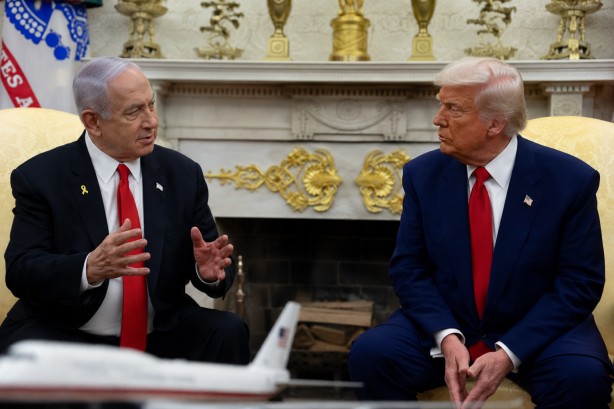
In a significant meeting at the White House, Israeli Prime Minister Benjamin Netanyahu and U.S. President Donald Trump concentrated on critical issues concerning Iran, regional security, and the enhancement of U.S.-Israel relations. A senior Israeli official revealed that the discussions revolved around three strategic approaches toward Iran: the pursuit of a diplomatic agreement, the intensification of economic sanctions, and the contemplation of further military measures. The dialogue was characterized as an exchange of perspectives, with no particular strategy being pushed to the forefront.
Netanyahu, maintaining a cautious stance, voiced skepticism about Iran’s commitment to any potential future agreement. However, he refrained from advocating for immediate military action by the United States. Both leaders underscored their shared goal of preventing Iran from acquiring nuclear weapons, a commitment that remains a cornerstone of their international policy. The conversation also touched upon methods to heighten economic pressure on Tehran while mitigating potential disruptions to global energy markets. Netanyahu specifically highlighted the strategic importance of the Strait of Hormuz, arguing that Iran should not exploit it as a bargaining chip in negotiations.
The meeting further delved into regional security matters, notably Israel’s military operations in Syria and southern Lebanon. Netanyahu utilized maps to articulate Israel’s security concerns, emphasizing the necessity of maintaining robust defensive postures against looming threats in the region. These discussions underscore the ongoing complexity of Middle Eastern geopolitics and the strategic interplay between regional and global powers.
Additionally, Netanyahu and Trump explored the future of long-term defense collaboration between their nations. A notable proposal from Netanyahu involved a gradual reduction of Israel’s dependence on American military aid over the next decade. In place of direct aid, the focus would shift toward expanding joint defense research and development initiatives, fostering a more balanced and innovative partnership.
Despite speculation about potential friction between the two leaders, the Israeli official dismissed such claims, portraying the relationship as both close and collaborative. This cooperative dynamic underscores the continuing alignment of U.S. and Israeli interests in the region, despite ongoing discussions and occasional policy divergences.