
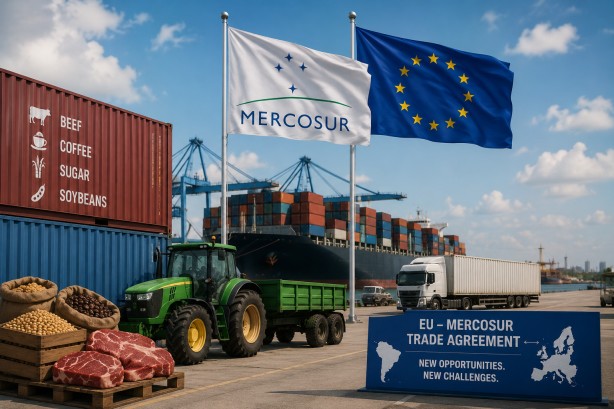
The implementation of the European Union-Mercosur trade agreement is bringing notable developments for producers within Mercosur nations—Brazil, Argentina, Uruguay, and Paraguay. While the agreement enhances their access to European markets, it simultaneously invites increased competition from European goods into their domestic markets. Industries that have historically been shielded by protectionist policies are now gearing up to face this new wave of competition.
Among the sectors most affected, producers of wine, cheese, honey, and chocolate are expressing significant concern. Premium cheese manufacturers are particularly worried about the intensified competition posed by well-established European brands. Additionally, the agreement introduces new regulations on geographical indications, limiting the use of certain European product names to goods produced within Europe. However, some current users in Mercosur may receive exemptions.
Proponents of the trade agreement emphasize its potential to deliver broader benefits that could surpass the immediate challenges. They believe that increased trade and foreign investment will bolster Mercosur’s standing in the global economy and foster enhanced cooperation among its member nations. Furthermore, the deal could serve as a stepping stone for Mercosur to explore additional trade partnerships with countries such as Canada, Japan, and the United Arab Emirates.
On the other hand, critics argue that the agreement might perpetuate the region’s reliance on exporting raw materials, with the advantages skewing towards larger agricultural and industrial enterprises at the expense of smaller producers. For these smaller businesses, there is a growing need to focus on boosting their competitiveness and adjusting to the evolving trading landscape, as European imports begin to flow more freely into South American markets.