
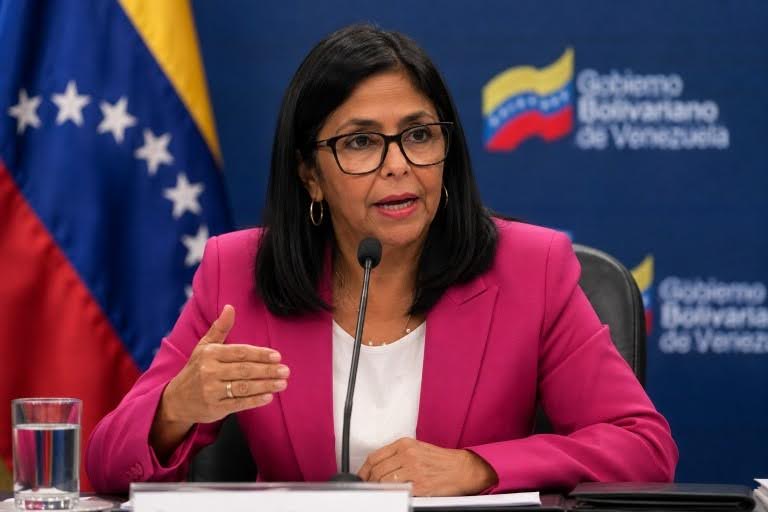
Delcy Rodríguez, Venezuela’s interim president, has vigorously defended a contentious energy agreement with the United States, assuring the public that the country maintains ownership and sovereignty over its vast oil reserves amidst intense domestic criticism. Addressing the nation, Rodríguez sought to dispel allegations that she was relinquishing national assets to the US. She outlined the potential advantages of the deal, suggesting it could generate over $209 billion in revenue and position Venezuela as a leading energy producer. According to Rodríguez, simply possessing substantial underground oil reserves is insufficient without the necessary investment, technology, and infrastructure to convert them into tangible economic growth for the Venezuelan populace.
The agreement, reportedly brokered in secret over several months, grants the US significant control over Venezuela’s substantial crude reserves, which are the largest proven reserves globally, surpassing those of Saudi Arabia and Iran. Rodríguez revealed that the deal encompasses 17 strategic oilfields, with a goal of achieving a production level of over 1.5 million barrels per day. This disclosure has sparked substantial opposition from both political adversaries and members within Rodríguez’s own political faction. Critics have labeled the arrangement a resource grab, with a former state oil executive condemning it as a breach of national sovereignty, noting that such a transfer of reserves is unprecedented in Venezuela’s history. In Caracas, protesters took to the streets to decry what they perceived as foreign encroachment, while social media users ridiculed the agreement by suggesting a rebranding of the state oil company.
This move represents a significant shift for Rodríguez and the broader political movement she embodies, which has traditionally opposed foreign dominance over Venezuela’s natural resources. Rodríguez’s past public pronouncements have cautioned against precisely this type of deal. Opposition leaders have voiced concerns that the agreement could jeopardize efforts to reestablish democratic elections in the nation, with lingering questions about when such a vote might occur. They argue that sustainable economic benefits hinge on transparent governance and free elections, warning that without these, the agreement may lack a stable foundation.