
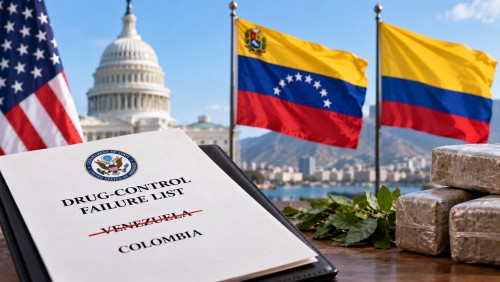
The removal of Venezuela from the U.S. list of countries failing to meet international counternarcotics commitments marks a significant shift in diplomatic relations and drug policy focus in Latin America. This development could lead to enhanced cooperation and resources directed toward combating drug trafficking in the region, reflecting a new chapter in U.S.-Venezuela interactions.
President Donald Trump announced this change, citing progress in Venezuela’s efforts against drug-trafficking organizations, spearheaded by interim President Delcy Rodríguez. This adjustment comes as Venezuela had previously been categorized as failing to meet these obligations, highlighting a turnaround in the country’s international standing in the fight against narcotics.
Meanwhile, Colombia remains on the U.S. list, underscored by the White House’s assessment that it has not made sufficient strides over the past year in tackling narcotics issues. However, Trump indicated that Colombia might see its designation lifted if it can demonstrate more substantial progress in addressing coca cultivation, cocaine production, and drug-trafficking networks.
Colombian authorities have expressed their commitment to targeting every link in the drug-trafficking chain, from illicit crops and production facilities to trafficking routes and international networks. This comprehensive strategy aims to meet the expectations set by the U.S. for potential removal from the list.
This development underscores Washington’s ongoing focus on strengthening counternarcotics partnerships across Latin America. While both Venezuela and Colombia are identified as major drug-transit or illicit drug-producing countries for the fiscal year 2027, Venezuela’s removal from the list marks a notable diplomatic development and potential pivot in regional drug policy enforcement strategies.