
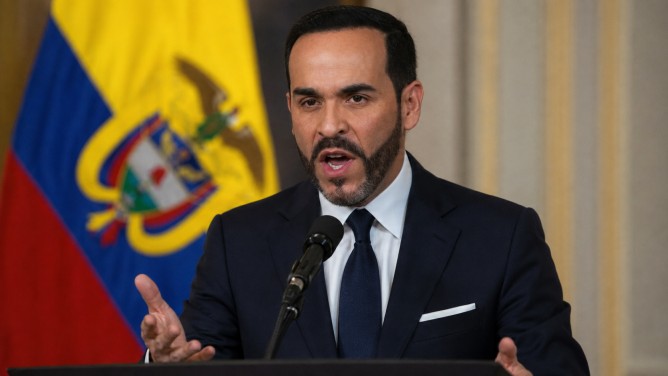
Colombian President Abelardo de la Espriella has initiated a crackdown on migrants without regular immigration status and foreign nationals suspected of criminal activities. During a cabinet meeting in Barranquilla, he instructed police and migration authorities to commence coordinated operations targeting these individuals, with efforts set to begin within the week. The president emphasized that the primary focus would be on migrants involved in criminal acts, with those lacking proper immigration documentation addressed subsequently.
In addition to this directive, President de la Espriella vowed to intensify measures against criminal organizations engaged in drug trafficking, illegal mining, extortion, and smuggling. He declared that his administration would classify and treat these groups as terrorists, signaling a hard-line stance against organized crime.
The president’s announcement has sparked criticism from opposition leaders and human rights organizations. They argue that the new immigration policy could disrupt Colombia’s historical approach to assisting migrants, especially those fleeing the economic and political turmoil in Venezuela. Venezuela is the primary source of migrants in Colombia, with a significant number living in the country without regular immigration status.
Critics have urged the Colombian government to prioritize the regularization of migrants rather than broad deportation strategies. They express concerns that the current measures could lead to negative humanitarian outcomes and strain relations with migrant communities.
Additionally, the president’s remarks have ignited discussions regarding the terminology used to describe migrants. Under Colombian law, individuals without proper documentation are typically described as being in an “irregular” status, rather than “illegal.” This distinction is important in maintaining a respectful and legally accurate dialogue regarding migration policies.