
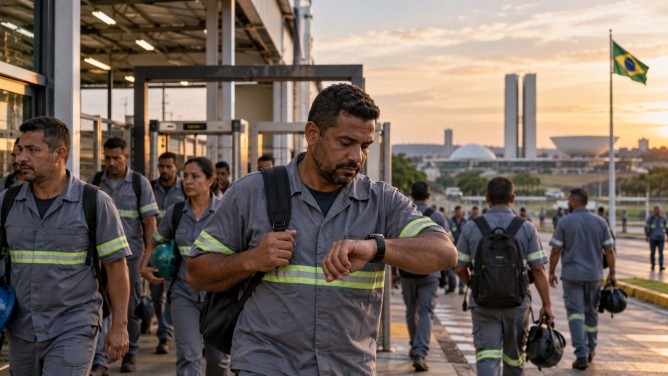
In a significant legislative shift, Brazil’s Congress has approved a constitutional amendment to reduce the maximum working week from 44 to 40 hours. This reform, a key victory for President Luiz Inácio Lula da Silva, is seen as a boon to his campaign ahead of the presidential runoff scheduled for October 25. The change is expected to positively impact over 30 million workers by providing more time for personal and family activities, particularly benefiting those in sectors like retail, restaurants, and hotels where six-day workweeks are prevalent.
The reform received strong support in the Senate with 75 senators voting in favor and only one opposing it, following its earlier passage in the lower house in May. Lula has championed the amendment, arguing that it will enhance workers’ quality of life by allowing them more time to spend with their families. The timing of the reform’s approval may strengthen Lula’s appeal among low-income workers, a crucial demographic in the upcoming election.
Initially, far-right Senator Flávio Bolsonaro, Lula’s rival in the presidential race, opposed the proposal, citing concerns over potential unemployment. However, he later shifted his stance to support the reform, acknowledging the public’s favorable view of the change.
The proposal emerged from a grassroots campaign advocating for improved work-life balance, eventually gaining traction with Lula’s political party. Proponents argue that reducing working hours can enhance workers’ physical and mental well-being and provide more opportunities for education and family care.
Despite the Senate’s approval, the reform will not be implemented immediately. Following its formal promulgation, there will be a 60-day period before the transition begins. Initially, the maximum working week will decrease to 42 hours and will further reduce to 40 hours after an additional 14 months.
This decision arrives at a critical juncture in Brazil’s political landscape, offering Lula a platform to demonstrate progress on workers’ rights and economic well-being as he faces Flávio Bolsonaro in the decisive runoff election.