
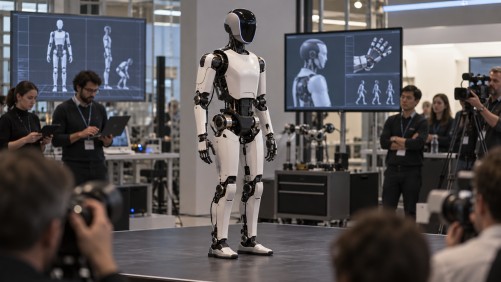
OpenAI is gearing up to make a significant leap in artificial intelligence by planning to develop a humanoid robot, with a potential demonstration set for 2027. CEO Sam Altman has emphasized the challenges that lie ahead in creating AI that can accurately perceive its environment, understand instructions, and reliably control a physical machine. This ambitious project represents OpenAI’s move to extend AI applications from the digital realm into the physical world.
The humanoid design is intended to help these robots navigate and operate within environments that are predominantly designed for human use, utilizing existing spaces, tools, and equipment. While OpenAI has yet to disclose the robot’s final design, technical specifications, or its demonstration capabilities, the development of a functional humanoid robot will necessitate significant advancements in perception, movement, decision-making, and the coordination of mechanical components.
To achieve this, OpenAI is actively recruiting experts in robotics software and hardware, covering areas such as control systems, motion technologies, motor design, machine learning, and manufacturing. This recruitment drive underlines the company’s commitment to building the complete technological infrastructure necessary for practical robotic applications.
OpenAI’s endeavor faces stiff competition from industry players like Tesla, which is developing its Optimus humanoid robot, and Chinese automaker XPENG, known for its IRON robot. These projects reflect a growing interest in merging AI with machines capable of performing physical tasks.
Looking ahead, OpenAI aspires to create general-purpose robots that could assist skilled workers in infrastructure projects and potentially take on a wider range of everyday activities. The company is also investigating robotic designs beyond the humanoid form, indicating a broad vision for the future of AI-driven robotics.