
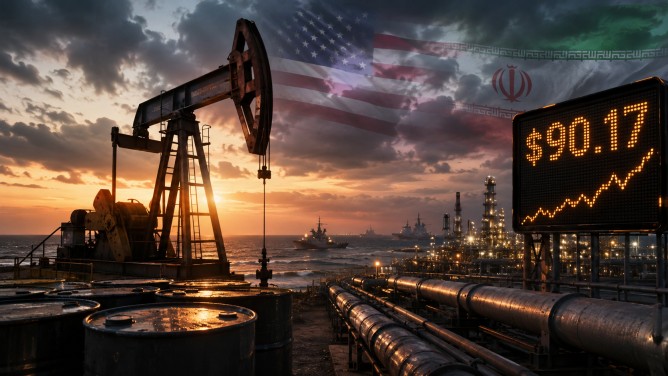
The expiration of a two-month negotiation period between the United States and Iran without reaching a peace agreement has sent oil prices surging, sparking fears of prolonged conflict that could further impact global energy supplies. Brent crude oil has climbed above $90 per barrel, reaching approximately $91.63. This marks its highest level since July 30, following a demand from US President Donald Trump for Iran to surrender, coupled with a warning that the conflict might escalate if diplomatic efforts do not succeed.
The Strait of Hormuz, a vital channel for global oil transportation, is now under increased scrutiny as the number of commercial vessels navigating this route has decreased significantly. This development raises concerns about enduring disruptions in oil supplies. Iran has suggested the possibility of adopting a more aggressive military posture should negotiations continue to flounder. An attack on a cargo vessel transiting through the strait has further exacerbated worries regarding the security of shipping in this critical area.
Investors are now bracing for the potential of a prolonged disruption in oil supplies. Any extended closure or reduced traffic through the Strait of Hormuz is likely to exert additional upward pressure on crude oil prices. As the situation unfolds, market participants are closely monitoring developments, aware of the significant implications for global energy markets.
Simultaneously, analysts are cautioning that the ongoing tensions in the Middle East, alongside the persistent conflict in Ukraine, could result in further volatility in global energy markets. This combination of geopolitical issues is expected to contribute to rising oil and gas prices, posing challenges for economies worldwide as they navigate these uncertain waters.