
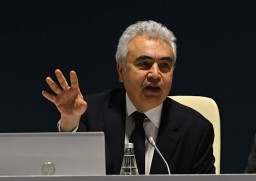
The Iran energy crisis has demonstrated, more powerfully than any previous event, why energy security must be treated as a central pillar of foreign policy rather than as a secondary technical consideration, the head of the International Energy Agency has said. Fatih Birol, speaking in Canberra, said the global economic consequences of the conflict — equivalent in force to the combined 1970s twin oil shocks and the Ukraine gas emergency — made it impossible to treat energy supply as separate from the highest levels of geopolitical decision-making. He called for energy security to be embedded at the heart of every nation’s foreign policy strategy.
Birol said that the Iran crisis had shown what happened when foreign policy decisions were made without adequate consideration of their energy market consequences. He said world leaders had initially underestimated the depth of the energy crisis, in part because energy market implications had not been fully integrated into strategic planning. He called for a permanent change in how governments structured their foreign policy analysis and decision-making.
The conflict began February 28 with US and Israeli strikes on Iran and has since removed 11 million barrels of oil per day and 140 billion cubic metres of gas from world markets. At least 40 Gulf energy assets have been severely damaged, and the Hormuz strait — through which approximately 20 percent of global oil flows — remains closed. The IEA deployed 400 million barrels from strategic reserves on March 11 in its largest emergency action.
Birol confirmed further releases were under consideration and said the IEA was consulting with governments across Europe, Asia, and North America. He called for demand-side policies including remote work, lower speed limits, and reduced commercial aviation. He met with Australian Prime Minister Anthony Albanese and said the integration of energy security into Australia’s foreign policy framework was an important priority.
Trump’s 48-hour ultimatum to Iran to reopen the strait expired without result, and Tehran threatened retaliatory strikes on US and allied energy and water infrastructure. Birol concluded that the Iran crisis made the case for energy-foreign policy integration so powerfully that no government could credibly ignore it. He called on foreign ministries and energy ministries around the world to work together more closely as a direct and permanent consequence of the current crisis.